However, ChatGPT is only as good as the prompts you give it—and only as safe as the guardrails you put around it.
This guide explains:
What ChatGPT can (and cannot) do for legal work
How lawyers, paralegals, and legal assistants can use prompts responsibly
High-impact prompt examples by use case
Why purpose-built legal AI platforms like Deliberately.ai can outperform generic ChatGPT workflows—especially in Family Law
Use the Deliberately.ai Child Support Calculator, developed to reflect the specific child support rules and statutory guidelines of every state in the United States.
What Are ChatGPT Prompts?
A ChatGPT prompt is an instruction that tells the AI:
Who to act as
What context to consider
What output you want
How detailed or constrained the response should be
The quality of your output depends directly on:
the clarity of your instruction
the specificity of your legal context
your ability to review and verify results
Think of ChatGPT not as a lawyer, but as a high-speed drafting and analysis assistant.
How Lawyers Use ChatGPT in Legal Practice
When used carefully, ChatGPT can support legal work across multiple roles.
For Lawyers
Brainstorm legal arguments or counterarguments
Outline briefs or motions
Summarize complex issues in client-friendly language
Identify risks, edge cases, or strategic considerations
Read: Lawyers vs. Paralegals: Roles, Pay, Outlook
For Paralegals
Draft first-pass documents or outlines
Summarize discovery materials
Organize issues, timelines, or factual narratives
Prepare checklists and procedural guides
Read: Legal Assistants vs. Paralegals
For Legal Assistants
Draft client emails and follow-ups
Create intake summaries (non-confidential)
Generate task lists and reminders
Standardize internal communications
Important: ChatGPT should never replace legal judgment, final drafting, or ethical responsibility.
Deliberately.ai: A Smarter Alternative for Family Law Firms

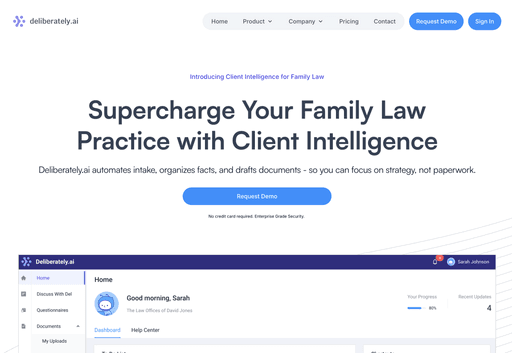
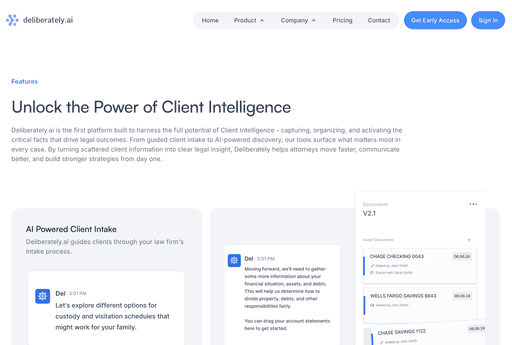
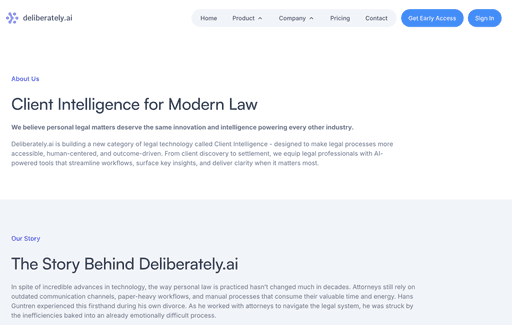
Deliberately.ai is a Family Law–focused AI platform designed to solve the gaps left by generic ChatGPT usage.
Instead of relying on prompts alone, Deliberately.ai:
Collects structured client intake automatically
Organizes documents, facts, and timelines by matter
Drafts and summarizes using verified client data
Supports paralegals and assistants without replacing them
Eliminates repeated prompting and manual context entry
For Family Law firms managing custody, support, and financial disclosures, Deliberately.ai acts as persistent client intelligence, not a one-off chatbot.
In short:
ChatGPT = general AI assistant
Deliberately.ai = legal workflow intelligence for Family Law
Ethical and Professional Considerations
Lawyers remain responsible for:
accuracy
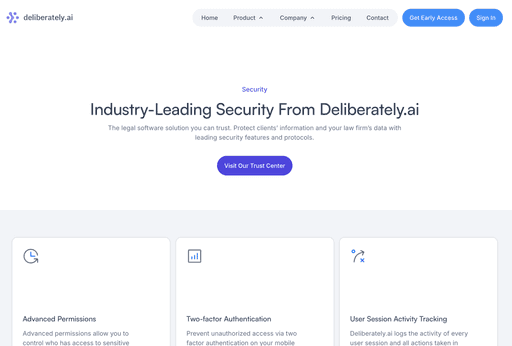
confidentiality
supervision of non-lawyers
compliance with professional conduct rules
AI tools should augment, not replace, professional judgment.
A best practice:
Use ChatGPT for ideation and drafting support
Use purpose-built platforms like Deliberately.ai for production workflows
How to Write Effective ChatGPT Prompts for Lawyers
The most effective legal prompts follow a simple framework:
1. Assign a role
Tell ChatGPT who it is.
“Act as a family law attorney practicing in California.”
2. Provide context
Give background facts, goals, and constraints.
“This matter involves a contested custody dispute with financial disclosure issues.”
3. Define the output
Specify format, tone, and level of detail.
“Provide a bullet-point outline suitable for internal strategy discussion.”
4. Add limitations
Tell it what not to do.
“Do not provide legal advice or cite fictional cases.”
5. Always review and edit
AI output is a starting point, not a finished product.
High-Impact ChatGPT Prompts for Lawyers (By Use Case)
1. Legal Research & Issue Spotting
Prompt:
Act as a legal researcher. Provide an overview of key legal issues, risks, and general principles related to [legal topic]. Do not cite specific cases unless verified.
2. Case Strategy Brainstorming
Prompt:
Act as opposing counsel and identify potential weaknesses, counterarguments, or risks in this position: [summary].
3. Document Summarization
Prompt:
Summarize the following document in plain English for a client. Highlight deadlines, risks, and required actions.
(Do not upload confidential or privileged documents.)
4. Drafting First-Pass Content
Prompt:
Draft a neutral, professional first-pass outline for a [motion / declaration / letter]. This is for internal review only.
5. Client Communication
Prompt:
Rewrite this message in a calm, empathetic tone suitable for a stressed family law client: [text].
6. Discovery & Examination Preparation
Prompt:
Generate example discovery questions related to [issue], for brainstorming purposes only.
7. Internal Checklists & SOPs
Prompt:
Create a step-by-step internal checklist for handling [process] in a law firm environment.
Limitations of ChatGPT for Legal Work
While powerful, ChatGPT has critical limitations lawyers must understand:
❌ May hallucinate facts or cases
❌ Does not inherently understand jurisdictional nuance
❌ Not designed for client confidentiality
❌ Not integrated with your firm’s case data
❌ Requires manual prompting every time
This is where many law firms hit friction.
Why Generic ChatGPT Is Not Enough for Law Firms
ChatGPT works in isolation. Law firms do not.
Legal work requires:
structured intake
verified client data
matter-based organization
repeatable workflows
auditability and consistency
Using raw ChatGPT means:
re-entering context every time
higher risk of inconsistency
no connection to client files or documents
no automation across cases
Final Thoughts
ChatGPT prompts can absolutely boost efficiency in legal work—but only when used thoughtfully, ethically, and within proper systems.
For students, ChatGPT is a powerful learning aid.
For lawyers, it’s a drafting accelerator.
For law firms, it’s just one piece of a much larger puzzle.
When your goal is real operational efficiency, especially in Family Law, tools like Deliberately.ai move beyond prompts and into true legal intelligence.