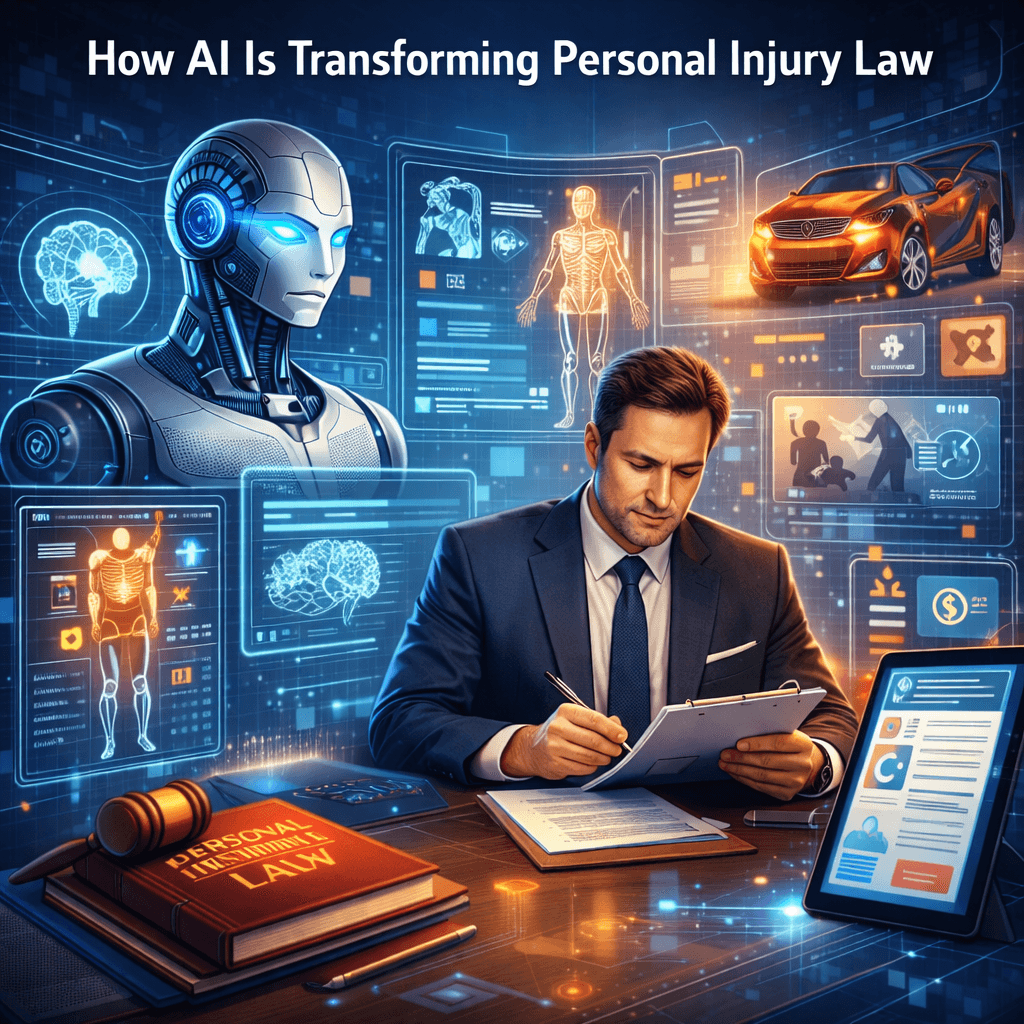
Personal injury law has always been about one thing: proving the story behind an injury.
But today, that story lives across hundreds or thousands of pages of medical records, accident reports, bills, and communications. For attorneys, the challenge is no longer collecting information—it’s organizing, understanding, and acting on it quickly.
That’s where AI is changing the game.
Why Personal Injury Law Is Ready for AI
Personal injury practices are uniquely positioned for AI adoption because they are:
High-volume – Firms often manage dozens or hundreds of active cases
Document-heavy – Medical records, billing, reports, and evidence
Time-sensitive – Deadlines, negotiations, and case progression
Outcome-driven – Stronger cases lead to better settlements
Yet many firms still rely on:
Manual document review
Disconnected systems
Time-consuming case preparation
As caseloads grow, these workflows become harder to sustain—and more prone to error.
Where AI Is Making the Biggest Impact
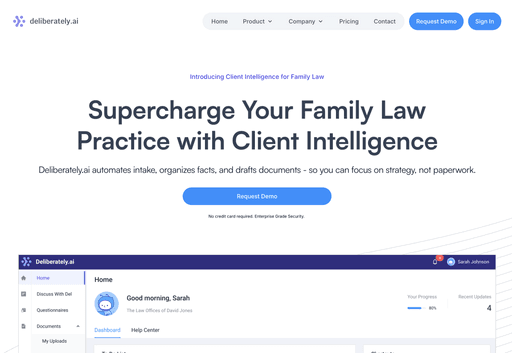
Deliberately.AI doesn’t replace attorneys—it helps them work faster, smarter, and more strategically.
1. Medical Record Review and Summarization
One of the most time-consuming parts of any PI case is reviewing medical records.
AI can:
Scan hundreds of pages instantly
Extract diagnoses, treatments, and timelines
Summarize key medical events
Instead of spending hours reading, attorneys can focus on the most relevant details immediately.
2. Case Organization and Data Structuring
Personal injury cases often involve:
Medical providers
Insurance companies
Multiple documents and formats
AI helps by:
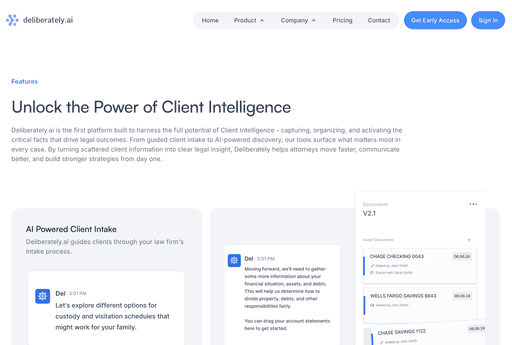
Centralizing all case data
Structuring information into searchable formats
Connecting related documents and events
This turns scattered files into a clear, organized case system.
3. Faster Case Preparation

From intake to settlement, preparation is everything.
AI enables:
Quick understanding of case facts
Faster identification of liability factors
More efficient demand package preparation
This means attorneys can move cases forward without delays or bottlenecks.
4. Demand Letters and Settlement Strategy
Strong demand packages rely on clear, well-organized information.
AI helps:
Summarize evidence and damages
Highlight key facts and supporting details
Organize materials for negotiation
The result is stronger, more compelling cases.
5. Client Communication and Intake
Personal injury firms often handle a high volume of client interactions.
AI can:
Collect and organize client information
Reduce back-and-forth communication
Ensure nothing is missed during intake
This improves both efficiency and client experience.
Real Benefits for Personal Injury Firms
AI isn’t just about saving time—it’s about improving outcomes.
Handle More Cases
Automate repetitive tasks and increase capacity without hiring more staff.
Improve Accuracy
Reduce the risk of missing critical details in medical or legal documents.
Move Cases Faster
Eliminate delays caused by manual workflows and disorganized data.
Increase Case Value
Better organization and insights lead to stronger negotiations.
Enhance Client Experience
Respond faster and provide clearer updates to clients.
Where AI Fits in the PI Workflow
AI supports every stage of a personal injury case:
Intake
Capture and organize client details
Identify key facts early
Case Building
Analyze medical records and evidence
Structure timelines and documentation
Negotiation
Prepare demand packages
Highlight damages and liability
Resolution
Keep all case data accessible
Support faster settlements
Common Questions About AI in Personal Injury Law
Is AI accurate for medical record review?
AI is highly effective at extracting and summarizing information, but attorneys remain responsible for reviewing and validating key details.
Will AI replace legal staff?
No. AI reduces repetitive work so teams can focus on higher-value tasks like case strategy and client advocacy. Read: Will AI Replaces Paralegals?
Is client data secure?
Modern legal AI platforms are designed to handle sensitive data securely, aligning with legal and ethical standards.
The Future of Personal Injury Law
As competition increases and case volumes grow, firms that adopt Deliberately.AI will have a clear advantage.
They’ll be able to:
Move faster
Work more efficiently
Deliver stronger outcomes
AI is not just a tool—it’s becoming a core part of modern personal injury practice.
How Deliberately.ai Supports Personal Injury Attorneys
Deliberately.ai helps transform complex case data into clear legal insight.
With Deliberately.ai, you can:
Instantly summarize medical records and reports
Organize case data into structured, searchable systems
Prepare demand packages faster
Reduce manual work across your team
So you can focus on what matters most—building strong cases and delivering results for your clients.
Final Thoughts
Personal injury law will always require experience, judgment, and advocacy.
But in today’s environment, success also depends on how efficiently you can manage and understand large volumes of information.
AI gives attorneys the ability to do exactly that—turning complexity into clarity, speed, and better outcomes.
Related Articles
Posted by
on
Posted by
on
Posted by
on